


For the country to be able to meet its electric vehicle (EV) and carbon emissions targets, it requires three elements to be in place: supply from the manufactures, demand from consumers and the necessary infrastructure to be in place.
We’ve looked at a range of statistics to show which cities are furthest ahead when it comes to embracing electric, through EV uptake and charging point availability.
The UK, for example, has seen an increase of nearly 260,000 licenced ULEVs (ultra-low-emission vehicles) since 2011, but taking a city-by-city look at the data suggests the distribution is uneven – Birmingham and Leeds alone account for more than 10% of those.
Which city has the most low-emissions vehicles?


The UK government announced in 2017 that the sale of petrol and diesel cars would be banned by 2040, before revising it to 2035 at the backend of last year. Although the switch is inevitable, it could be 15 years before battery-powered motoring is the only option.
But, breaking down figures from the Department for Transport (DfT), it seems many motorists are beating the curve. By the end of 2019, there were 269,377 ultra-low-emission vehicles (ULEVs) licenced in the UK – a 2,606% jump from 2011.
The regional distribution, however, is irregular – despite only six of the twenty cities we’ve looked at having more than 1,000 licensed ULEVs at the end of last year, they account for more than 10% of the UK total. Birmingham had the largest percentage jump from 2011-2019, followed by Leeds, Belfast, and Bradford.
The Northern Ireland capital’s jump of over 5,000% from only 20 ULEVs in 2011 to 1,055 in 2019 is perhaps due, in part, to the country’s early electric pilot studies that earned them a place on Reuters’ top 10 list of EV initiatives in 2011.
Are there enough charging points in the UK?

As the number of EV options rises, that’ll need to be reflected in the number of charging points. There are over 18,000 public charging devices in the UK – an almost fivefold increase from 2015. In addition, August 2019 saw a tipping point in fuel use, with the number of charging points overtaking petrol stations.
A closer look at the data, however, suggests the split is again uneven. Birmingham, with the largest number of ULEVs in our table, has the lowest number of charging devices per 100,000 of its population.
It’s the City of London with the most (370 per 100,000), followed by Coventry (55 per 100,000 people), Nottingham (38 per 100,000 people), Newcastle (36 per 100,000 people) and Glasgow (30 per 100,000 people) – all of which are above the UK average of 27, while the other 14 cities meet the national average, or are below.
The calls for a more developed charging infrastructure are backed up by a 2019 report that said 25 million public and private charging are needed by 2050, if the government’s emissions targets are to be met. All in all, the chargers, heat pumps and electricity network upgrades could top £280 billion.
EVs are still making market gains

The Society of Motor Manufacturers and Traders (SMMT) found EV market share is still on the rise, despite the lockdown lull in car production and sales.
Registrations for plug-in hybrids (PHEVs), for example, are up more than 220% on last year, while battery electric vehicles (BEVs) jumped nearly 80%. Those gains are coming at the expense of petrol and diesel models, too, which saw their market shares drop in the same period.
Citroën’s electric push
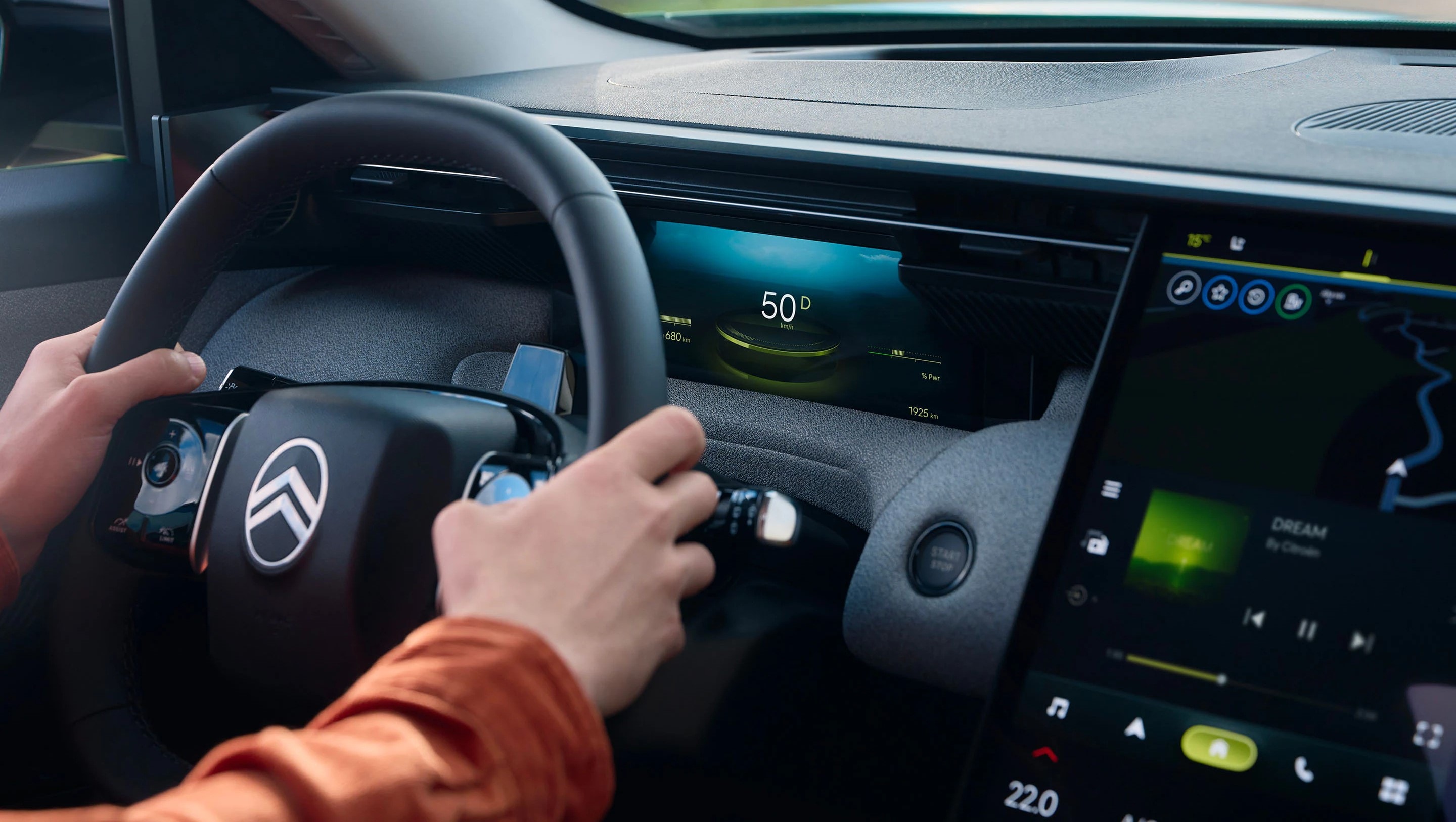
The recently revealed Citroën ë-C4 and C5 Aircross SUV Hybrid are expected on the road in 2020, as the brand’s EV flag bearers. The C4’s redesign, similar to the BMW X4 and Audi Q3 Sportback, brings SUV-inspired hatchback looks to a wider audience, while the all-electric e-C4 adds eco appeal.
Hybrids are also set to be axed in the 2035 ban, but until then, the likes of the C5 Aircross could sweeten the deal for drivers reluctant to make the switch, as a blend of electric and petrol.
Across the Channel, the offering goes even further; debuting this year, the Citroën Ami appeals to ‘drivers’ aged 14 and up. As an electric-powered microcar (quadricycle officially), it doesn’t apply to the same limitations as a standard road-going vehicle – even down to lease price, which could be the Euro equivalent of only £17 per month.
An EV future
There’s much to do before the UK is ready to take the plug-in plunge, but the latest trends would suggest we’re moving in the right direction. Citroën is also committed to having an electric variant of all models by 2025, with the ë-C4 and C5 Aircross plug-in hybrid leading the way.
To keep up to date with all things EV at Citroën, make sure to bookmark our Electric & Hybrid hub.